
Spring Seminar '26 - Renew and Refresh your Records Management Program
May 12, 2026
8:30 AM EDT - 4:30 PM EDT
Add to Calendar
Vistatech Center at Schoolcraft College
18600 Haggerty Road
Livonia, MI 48152
Visit Venue Website
Directions
Join us for our annual full-day Spring Seminar where we will cover topics to help you renew and refresh your records management program.
We are very excited to host this year's Spring Seminar in person, as well as offer the option of attending virtually via Zoom. While attending in person will give you the opportunity to network and enjoy the culinary delights of Schoolcraft College, we also recognize it may be challenging for some to attend in person. The ARMA Michigan board recognizes these challenges and wants everyone across the state to be able to participate in what will be a great day of learning, so we are offering a virtual option for the first time this year.
As an added incentive for registering sooner rather than later, we are offering an early bird discount on in-person tickets until April 15. Registration deadline for in-person attendees is April 27 and registration deadline for remote attendees is May 11 at 5:00 p.m.
Program Agenda
| 8:30 - 9:00 | Registration + Networking Breakfast |
| 9:00 - 9:05 | Welcome + Opening Remarks Keith Christianson, ARMA Michigan President |
| 9:05 - 9:30 | Opening Keynote Doug Kaminski: “Why Records Management Matters More Than Ever” |
| 9:30 - 10:30 | Session 1 Brent Gatewood: "Identifying & Leveraging Key Stakeholders from Program Assessment Through Implementation" |
| 10:30 - 10:45 | Break |
| 10:45 - 11:45 | Session 2 Andrew Ysasi "Governing AI Agents: The Expanding Role of RIM in the Autonomous Enterprise" |
| 11:45 - 12:45 | Lunch + Raffle Drawings |
| 12:45 - 1:45 | Session 3 Doug Kaminski: "Legal Holds or Legal Holds: The Role of Information Governance in eDiscovery and Litigation Readiness |
| 1:45 - 2:00 | Break |
| 2:00 - 3:00 | Session 4 Branden Mack: “Facility Moves and Relocations” |
| 3:00 - 3:30 | Session 5 Susan Marin: "Clean Sweep Initiative" |
| 3:30 - 4:00 | Session 6 Brian Benoit "Clear the Clutter: Spring Cleaning Your Records to Prepare for AI" |
| 4:00 - 4:30 | Panel Discussion - All What's Next for Records Professionals" |
| 4:30 - 4:35 | Thank You + Closing Remarks Keith Christianson, ARMA Michigan President |
Sessions Overview
Open Keynote: Why Records Management Matters More Than Ever – Presented by Doug Kaminski
As organizations adopt AI, automate workflows, and generate unprecedented volumes of digital information, the importance of strong records and information governance has never been greater. Every AI model, analytics platform, and automated decision system ultimately depends on one thing: trustworthy, well-managed data. This session explores how effective records and information governance provide the foundation for responsible AI governance, defensible data management, and regulatory compliance. Without clear retention policies, data classification, and lifecycle controls, organizations risk feeding AI systems incomplete, outdated, or sensitive information - creating legal, operational, and reputational risks. We’ll also highlight the expanding role of records and information governance professionals in shaping enterprise data strategy.
Session 1: Identifying & Leveraging Key Stakeholders From Program Assessment Through Implementation” – Presented by Brent Gatewood
In a time of technological disruption, who are the stakeholders in my organization and how do I leverage their changing positions and experiences to move our program forward? This session explores these two questions and reviews them from two perspectives: 1.) enterprise and network security and 2.) records/information management and governance. We will discuss the types of stakeholders found in organizations and review how you can identify, approach, and partner with them. We will help you to show them why this is important to the organization, and more importantly, what's in it for them. From here we discuss what is important to each stakeholder as they journey from program assessment all of the way through to implementation.
Session 2: Governing AI Agents: The Expanding Role of RIM in the Autonomous Enterprise – Presented by Andrew Ysasi
Artificial intelligence is rapidly evolving from assistive tools to autonomous agents capable of generating content, executing tasks, and influencing decisions across the enterprise. This presents a fundamental transformation on how information is created, managed, and governed. This session explores the current state of AI, the rise of agentic systems, and the governance risks they introduce, including data proliferation, lack of transparency, and accountability gaps. It positions Records and Information Management (RIM) professionals at the center of this shift, outlining how core principles must evolve to govern AI-generated and agent-driven information. Ultimately, this presentation makes the case that RIM is not a downstream function in the age of AI, but a critical control layer ensuring that AI agents remain trustworthy, compliant, and auditable.
Session 3: Legal Holds or Legal Holes: The Role of Information Governance in eDiscovery and Litigation Readiness – Presented by Doug Kaminski
When litigation or regulatory scrutiny arises, organizations often discover that the real challenge is not the case itself – it’s locating, preserving, and managing the right data. In today’s environment of cloud platforms, collaboration tools, and distributed data sources, weak information governance can quickly turn legal holds into legal risks. This session explores how strong information governance enables defensible legal hold practices and improves litigation readiness. Attendees will learn how governance frameworks, cross-functional collaboration, and modern technology can help organizations reduce risk, control discovery costs, and respond confidently to legal and regulatory demands.
Session 4: Facility Moves and Relocations – Presented by Branden Mack
This session explores several scenarios and considerations when doing facility moves and relocations, including: Steps to take when considering a large hard copy records move and review; Inventorying and categorizing physical records before relocation and disposition; Coordinating with Legal, Compliance and Information Governance Teams; Identifying records subject to Legal Holds and regulatory requirements; Risk mitigation strategies during closures and transitions; Chain-of-custody considerations for sensitive or confidential materials; and Digitization consideration.
Session 5: Clean Sweep Initiative – Presented by Susan Marin
An information retention clean sweep presentation highlights the organization’s commitment to maintaining a secure, efficient, and compliant data environment. It explains the importance of identifying outdated files, redundant records, and unnecessary data stored across systems, while reinforcing policies that guide what information must be kept, archived, or securely deleted. The presentation walks the audience through the clean sweep process—from planning and inventorying data repositories to implementing retention schedules and documenting disposal activities—emphasizing the benefits of reduced risk, improved productivity, and a stronger culture of information governance.
Session 6: Clear the Clutter: Spring Cleaning Your Records to Prepare for AI – Presented by Brian Benoit
In many enterprises, critical records and data are scattered across repositories, hidden in shared drives, collaboration tools, and legacy systems—creating risk, inefficiency, and blind spots for proper records management and AI initiatives. This session explores how organizations can use AI-driven discovery and modern records management practices to conduct a true “spring cleaning” of enterprise content. Learn how to uncover hidden information across your environment, automatically identify and classify content wherever it resides, and build a complete view of the records and data that drive your business. We will show you how AI can shine light into the “deep corners” of your information landscape—revealing unmanaged records buried beneath years of digital clutter—and how records management can be applied directly to that content in place, without disruptive migrations. Attendees will gain practical strategies to bring order to fragmented data, strengthen compliance, and prepare their information foundation for AI-driven innovation. If you wait until the mess gets too big, cleanup becomes exponentially harder. Join this session to learn how proactive records management and AI-powered discovery can transform spring cleaning into a continuous strategy.
Panel Discussion: What’s Next for Records Professionals
Our speakers will conduct a panel discussion and cover the following topics: AI & Automation; Evolving Skill Sets; Career Pathways (CRM, IGP, etc.); and ARMA & ICRM Resources.
About Our Speakers
 Doug Kaminski is Chief Revenue Officer for Infinnium, the leading provider of “at the source” data solutions for the legal and privacy professions. Doug joined Infinnium with over 20 years of experience in the legal industry spanning four continents. A frequent speaker and published author, he brings to the Infinnium team deep experience in the legal technology and services industry, having held leadership positions at Relativity, Symantec, Clearwell Systems, Purpose Legal, LexisNexis, and Huron Legal (now Consilio). Doug is a member of the International Association of Privacy Professionals, a Fellow of the Claims and Litigation Management Alliance, the Chicago Bar Association, the Detroit Bar Association, and is on the Global Advisory Council for the EDRM, the IGRM, and the EDRM 2.0 Committee. No AI was harmed in the making of this bio.
 Brent Gatewood is an Information Governance & Technologies Subject Matter Expert with Neosek. Over the past 25 years, Brent has successfully established a career in information governance and records management, delivering innovative and modern solutions to customers worldwide. In addition to his expertise in information governance, Brent has a proven track record of delivering complex, high-value projects for organizations across a diverse range of highly regulated industries, from large corporations to small businesses. Brent’s involvement in this industry enables him to leverage his customers’ experiences in delivering real-world solutions grounded in industry best practices. This expertise empowers customers to maximize the value of their investments in solutions while effectively managing governance, risk, and privacy concerns.
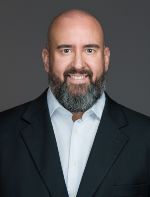 Andrew Ysasi (EE-SA-SEE), MS, CRM, IGP, CIP, CIGO, FIP, CIPM, CISM, PMP is a senior Information Governance executive with 25 years of experience advancing governance strategy, professional standards, and leadership across the Information Governance industry. As Vice President of Advocacy at Vital Records Control (VRC), he serves as a visible champion for the IG profession mentoring practitioners, delivering education, supporting clients, and promoting best practices that strengthen governance maturity across organizations navigating regulatory complexity, digital transformation, and emerging technologies. Andrew’s influence spans the global Information Governance community. He serves on the ARMA International Board of Directors and as Treasurer of the ARMA International Educational Foundation (AIEF) through July 2026. He previously served on the Executive Committee of the Institute of Certified Records Managers from 2020–2023 and teaches in San Jose State University’s nationally recognized MARA program, helping prepare the next generation of IG leaders to address data governance, privacy, cybersecurity, and AI-enabled systems. He is also frequently invited to speak at industry conferences, professional forums, and organizational events, where he translates complex governance challenges into practical, defensible strategies. A recognized thought leader, Andrew is the founder of Admovio® and a featured resume expert for CIO.com. His contributions include Records and Information Management, Third Edition, published by ALA Neal-Schuman, as well as ARMA’s Information Governance Body of Knowledge (IGBOK) and Wiley’s Information Governance, Second Edition. His work increasingly focuses on the intersection of Information Governance, data privacy, cybersecurity, and AI governance, emphasizing defensible data practices, policy alignment, and risk-aware use of advanced technologies. He holds a Master of Science in Administration from Central Michigan University, a Bachelor of Science in Information Technology, and executive certificates in Data Analytics from Wharton School at the University of Pennsylvania and in Data Privacy Strategy from Cornell University.
 Branden Mack is a dedicated records management professional with over 30 years of experience in the industry, including extensive roles with Iron Mountain. He currently serves as a Senior Records Analyst where he brings a high level of expertise in records organization, analysis, and compliance within a fast-paced corporate environment. Prior to being an Outsourced Senior Records Analyst, Branden spent 15 years with Iron Mountain, where he built a strong foundation in records management from the ground up. He began his career in the records center, handling box and file retrieval, before advancing into transportation and logistics. Over time, he developed a comprehensive understanding of the entire records lifecycle—from order placement and retrieval to secure delivery. Branden later transitioned into Special Projects, working directly on-site with clients to support records management initiatives such as office closures, large-scale records packing, and organizational transitions. These experiences strengthened his adaptability, attention to detail, and customer service skills. After moving to Outsourced Senior Records Analyst, Branden gained valuable insight into the expectations and needs of clients who rely on offsite records vendors. By combining his vendor experience with his corporate perspective, he has developed a well-rounded understanding of customer needs and how to meet them effectively. This unique perspective allows him to deliver efficient, accurate, and client-focused solutions in every aspect of his work.
 Susan Marin, CRM, CIGO, MS, PMP, is a Senior Consulting Manager and is part of Consilio's Advisory Services team. Susan has 22-years of litigation, information governance, records management, and legal hold experience. Susan earned her master's degree in organizational change and leadership. With expertise in the use of change management techniques and a foundation of corporate records and information management experience, Susan advised and counseled a Michigan non-profit organization in the creation of their information governance procedures and processes to establish a legal, defensible, and repeatable process. This engagement included tasks such as the development of surveys/questionnaires for the data owners, creation of their information and records management policies and procedures, and updates to other policies with record and information management implications.
 Brian Benoit is a Principal Solutions Consultant at OpenText with more than two decades of experience helping organizations design and implement enterprise content management and information governance strategies. He specializes in applying records management and intelligent discovery techniques to help organizations gain control of distributed content and prepare their information for responsible AI adoption.
Thanks to our event sponsors